
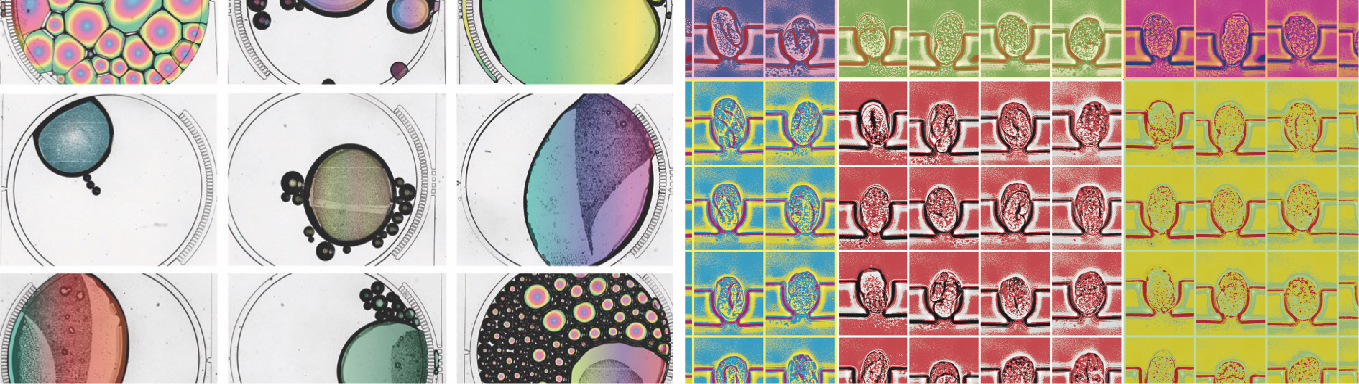
The Laboratory of Microsystems LMIS2 of Prof. Martin Gijs was established in 1997 and has as mission the development of new microfabrication technologies and to exploit these for applications of industrial interest. Several start-up companies have been created over the years from the lab. We are doing multidisciplinary research in the fields of design, simulation, fabrication, integration and application of microsystems, in particular of microfluidic systems.
Research interests
Novel microfabrication technologies
- We have synthesized CdSe nanocrystals in presence of amine coordinating ligand and demonstrated the formation of CdSe photoluminescent nanotubes with visible-light photocatalytic performance.
- We have made zinc oxide nanostructures in a continuous flow micro reactor using a hydrothermal process.
Microfluidics and Bio-MEMS
- We have used various types of microfluidic chips for studying in vivo the nematode Caenorhabditis elegans. In particular we work on automated microfluidics-enabled phenotyping of whole populations of worms during their embryonic and post-embryonic development stages at single-organism resolution.
- We do multimodal imaging and high-throughput image-processing for drug screening using worms on-chip.
- We have developed a dynamic microfluidic nanocalorimetry system for measuring C. elegans metabolic heat, as well as an isothermal nanocalorimetric platform for antimicrobial susceptibility testing based on bacterial metabolic heat measurements.
- We are using use microfluidic chambers for high-content, cell-by-cell assessment of cancer biomarker overexpression and amplification in tumor tissue sections. We work on microfluidics-assisted multiplexed biomarker detection for in situ mapping of immune cells in tumor sections.